

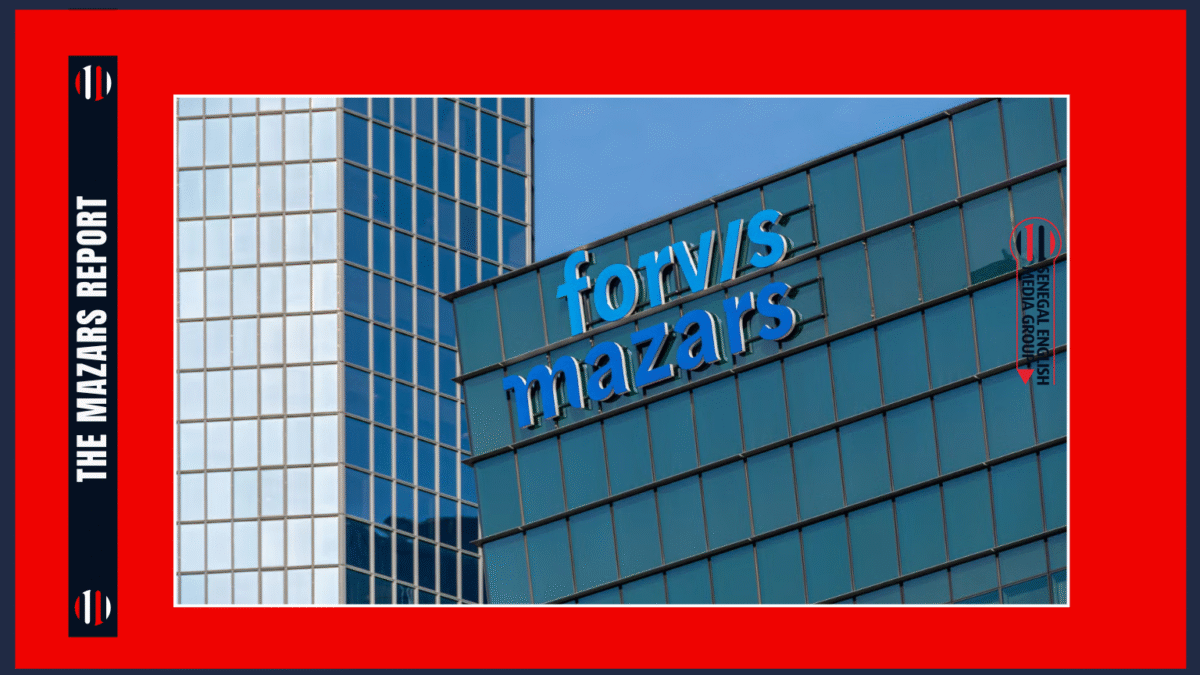
Forvis Mazars, an international audit and consulting firm with a significant presence in Senegal, has been at the center of key political and economic developments in the country, primarily through its extensive auditing work commissioned by the Senegalese government. These engagements are closely tied to the new administration’s agenda of transparency, accountability, and economic reform.
Key Engagements and Findings:
- Public Debt Audit: The current Senegalese authorities, including President Bassirou Diomaye Faye and Prime Minister Ousmane Sonko, commissioned Forvis Mazars to conduct a comprehensive audit of the nation’s public debt. This initiative was prompted by accusations that the previous administration under former President Macky Sall may have misreported or concealed significant economic and financial information between 2019 and 2023. The International Monetary Fund (IMF) has received and is currently reviewing Mazars’ preliminary report, noting that its assessment generally aligns with their expectations regarding previously undeclared debt, estimated to be nearly 4,000 billion CFA francs (approximately $7 billion). This audit is led by Sidy Diakhoumpa of Forvis Mazars and aims to trace all debts, commercial, bilateral, and multilateral, creditor by creditor, including those incurred by public companies such as Senelec, Société Africaine de Raffinage (SAR), and Aéroport international Blaise-Diagne.
- Oil and Gas Project Audits: In April 2023, Mazars secured a 24-month contract, valued at €606,000, to audit oil and gas licenses held by major international companies like Total, BP, Fortesa, Rex Atlantic, Oranto Petroleum, and Cairn, where the state-owned Petrosen SA holds a minority stake. This audit is part of the government’s broader strategy to enhance transparency, ensure sustainable management of hydrocarbon resources, and maximize tax revenues as the Greater Tortue Ahmeyim (GTA) project comes into production.
- BP Grand Tortue Ahmeyim (GTA) Field Audit: A confidential Mazars report, requested by the Senegalese government to support gas project negotiations and strengthen institutional capacities, provided a critical assessment of BP’s reported expenses for the GTA offshore gas field between 2012 and 2021. The report disputes BP’s claim of $4.1 billion in recoverable costs, asserting that only a quarter of this sum is actually recoverable. Mazars identified $2.8 billion in “documented costs not recoverable,” “costs not yet eligible for recovery,” and “insufficiently justified or documented costs.” Concerns were also raised regarding BP’s selection of subcontractors and the use of related entities without prior competition. This report, received by Energy and Mines Minister Birame Soulèye Diop, is a crucial tool for the current executive in its stated intent to renegotiate oil and gas contracts signed under the previous administration.
Key Political Figures:
The “Rapport Mazars” in Senegal is directly linked to the policies and objectives of the new political leadership.
- President Bassirou Diomaye Faye and Prime Minister Ousmane Sonko, leaders of the ruling PASTEF party, are the driving force behind these audits, using them to fulfill their campaign promises of greater transparency, combating corruption, and ensuring that Senegal’s natural resources and public finances benefit its citizens. Their party’s recent projected victory in the November 2024 legislative elections is expected to strengthen their mandate to implement these reforms.
- Former President Macky Sall and his administration are the focus of the public debt audit, facing accusations of financial mismanagement and lack of transparency.
- Birame Soulèye Diop, the Minister of Energy and Mines, is a key figure in handling the findings of the Mazars audit on oil and gas projects.
- Julie Kozack, Director of the IMF’s communications department, has highlighted the international community’s engagement with Senegal regarding these financial transparency efforts.
Upcoming Legislative Changes:
The findings from the Mazars reports are expected to catalyze several legislative and policy changes:
- Fiscal and Debt Management Reforms: Following the revelations of undeclared debt and misreported data, the IMF, in collaboration with Senegalese authorities, is pushing for corrective measures. These include centralizing debt management, auditing payment arrears, establishing a comprehensive debt database, and consolidating treasury accounts to ensure reliable budget reporting and improved public financial management.
- Natural Resource Contract Renegotiation: The critical audit of BP’s expenses in the GTA project provides significant leverage for the government to renegotiate existing oil and gas contracts, potentially leading to stronger local content requirements or higher tax policies to ensure greater national benefit from these resources.
- Tax and Customs Code Modernization: The Senegalese government is actively working on reforms to its General Tax Code and Customs Code. These changes aim to modernize the legal framework, achieve fiscal consolidation, and enhance economic competitiveness, aligning with the new administration’s economic vision.
- Anti-Corruption Legislation and Enforcement: The new government has explicitly pledged to address corruption, which may involve new legislation or stronger enforcement mechanisms. Prime Minister Sonko has specifically promised to empower the High Court of Justice to try former officials suspected of embezzlement.
- Digitalization of Legal and Administrative Processes: Initiatives are underway to digitize legal processes, including a pilot e-justice platform and the digitization of civil status records, aiming to improve accessibility and efficiency within the legal system.
These developments underscore a pivotal period in Senegalese politics, with the work of Forvis Mazars providing critical information that is shaping the government’s reform agenda and its engagement with both international financial institutions and foreign investors.