

Guinea-Bissau is currently under military rule following a coup d’état on November 26, 202, which saw the arrest and deposition of President Umaro Sissoco Embaló. The military announced a takeover and suspended all constitutional institutions and the ongoing electoral process.
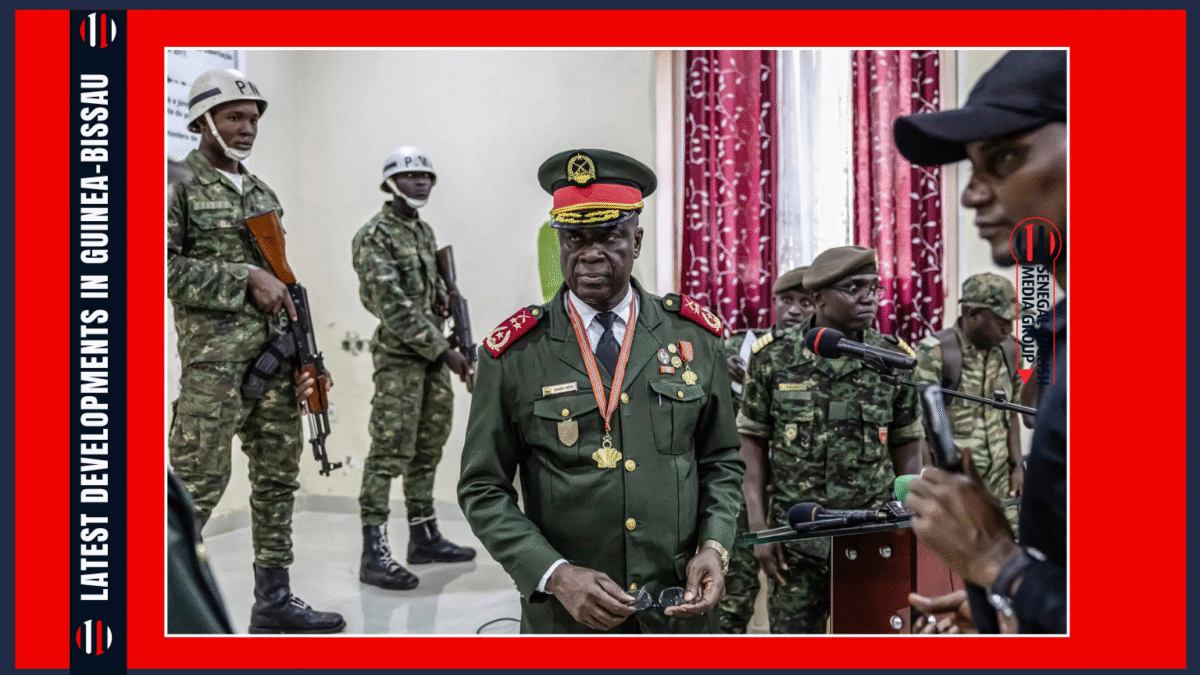
On November 27, 2025, General Horta Inta-A was sworn in as the head of a new military government, declaring a one-year transition period. The coup occurred amidst a highly contested presidential election held on November 23, 2025, where both Embaló and opposition candidate Fernando Dias da Costa had prematurely claimed victory. Regional and international bodies, including ECOWAS and the African Union, have condemned the coup, calling for a return to constitutional order and the immediate release of all detained officials.
Recent Developments
- November 23, 2025: Guinea-Bissau held presidential and legislative general elections.
- November 24, 2025: Both incumbent President Umaro Sissoco Embaló and his main challenger, Fernando Dias da Costa, claimed victory in the presidential election, even before official results were released.
- November 26, 2025:
- Gunfire erupted near the presidential palace, the National Electoral Commission headquarters, and the interior ministry in the capital, Bissau, around midday.
- Military officers appeared on state television to announce that they had seized “total control” of the country, suspending the electoral process, closing all land, sea, and air borders, and imposing a nightly curfew from 9 p.m. to 6 a.m. They stated their intervention was to counter an alleged plot to manipulate electoral results involving national politicians and a “well-known drug lord”.
- President Umaro Sissoco Embaló confirmed to French media (France 24 and Jeune Afrique) that he had been “deposed” and arrested, reportedly by the army chief of staff.
- Opposition candidate Fernando Dias da Costa also reported that armed men attempted to detain him, but he managed to escape and confirmed he was safe.
- A joint statement by the African Union (AU) Election Observation Mission, ECOWAS Election Observation Mission, and the West African Elders Forum expressed deep concern over the coup and called for the restoration of constitutional order and the immediate release of detained officials.
- President Embaló reportedly contacted a close adviser to Congolese President Denis Sassou-Nguesso on this day, seeking help to monitor the rapidly deteriorating situation.
- November 27, 2025:
- Soldiers announced General Horta Inta-A (also referred to as Horta N’Tam or Horta N’Ta Na Man), who was the Army Chief of Staff and a close ally of the deposed President Embaló, as the new head of the military government. He was sworn in to lead the “High Military Command for the Restoration of National Security and Public Order” and is expected to oversee a one-year transition period.
- The military high command lifted the overnight curfew and ordered the reopening of markets, schools, and private institutions. However, they also “strictly prohibited” any demonstrations, marches, strikes, or actions that disrupt peace and stability.
- President Embaló’s whereabouts remained unknown, though the High Military Command stated he was in “good health”.
- Several senior government officials, including Interior Minister Botche Candé, Chief of the General Staff Biague Na Ntan, and Deputy Chief of Staff Mamadou Toure, were reportedly detained.
- Nigeria’s President Bola Ahmed Tinubu participated in an extraordinary virtual summit of ECOWAS leaders to address the crisis, with Nigeria, Ghana, and South Africa issuing strong condemnations of the coup and calling for a return to constitutional rule.
Diplomatic Movements & Exiles
- President Umaro Sissoco Embaló (Guinea-Bissau): On November 26, 2025, President Embaló was arrested and deposed during the coup. His current whereabouts were unknown as of November 27, 2025, although the military indicated he was in “good health”. He had reportedly reached out to Congolese President Denis Sassou-Nguesso for assistance on the day of the coup. President Embaló had previously visited INTERPOL headquarters in Lyon, France, on September 12, 2025, to strengthen cooperation on security and drug trafficking.
- Regional Exiles (Guinea-Bissau, Guinea, Mali):
- Guinea-Bissau: Former President Umaro Sissoco Embaló is currently detained following the coup.
- Guinea: The political situation in neighboring Guinea remains tense ahead of presidential elections scheduled for December 28, 2025, where junta leader Gen. Mamadi Doumbouya is running. Prominent opposition figures like Cellou Dalein Diallo and Sidya Touré have faced exile or constraints since the 2021 coup. There are no recent reports indicating their specific presence in Senegal.
- Mali: In August 2025, Mali saw the arrest of two generals and over 40 soldiers for allegedly attempting to destabilize institutions. The country is ruled by a military junta led by Colonel Assimi Goïta. No information is available in the recent intelligence regarding the presence of Malian political refugees or ousted leaders in Senegal.
Key Actors & Statements
- General Horta Inta-A (New Junta Leader, Guinea-Bissau): Sworn in on November 27, 2025, as the head of the military government for a one-year transition period. He was the Army Chief of Staff and a close ally of the deposed President Embaló. He stated that the military intervention was necessary due to the “inability of political actors to stem the deterioration of the political climate”.
- President Umaro Sissoco Embaló (Deposed President, Guinea-Bissau): Arrested on November 26, 2025. He declared to French media that he had been “deposed” in a coup led by the army chief of staff. The opposition, however, has alleged that Embaló may have fabricated the coup to avoid an election defeat.
- Fernando Dias da Costa (Opposition Candidate, Guinea-Bissau): Claimed victory in the November 23, 2025, elections and subsequently accused Embaló of fabricating the coup to prevent the release of unfavorable election results. He reported an attempt to detain him but confirmed he was safe.
- African Union (AU): Chairperson Mahmoud Ali Youssouf “unequivocally condemned” the military coup on November 27, 2025, calling for the immediate and unconditional release of President Embaló and all detained officials. The AU reiterated its “zero tolerance” for unconstitutional changes of government.
- ECOWAS: The regional bloc expressed deep concern over the military takeover and the arrests of election officials on November 26, 2025, urging the armed forces to immediately release the detained officials and allow the electoral process to conclude. An extraordinary virtual summit was convened on November 27, 2025, to address the crisis.
- Nigeria, Ghana, South Africa: All three nations issued strong condemnations of the coup on November 27, 2025, calling for the restoration of constitutional order and respect for democratic processes.
Implications & Outlook
Short-term Projection (next 48 hours):
The immediate outlook for Guinea-Bissau is one of continued military control. With General Horta Inta-A sworn in as transitional leader and protests banned, the military junta aims to consolidate its power. International pressure from ECOWAS and the AU is expected to intensify, potentially leading to sanctions or further diplomatic isolation. The whereabouts and status of President Embaló and other detained officials will remain a critical point of concern. The country’s borders, recently reopened, will be closely monitored.
Long-term Strategic Impact:
This latest coup, the ninth or attempted coup since independence in 1974, deepens Guinea-Bissau’s chronic political instability and its reputation as a “narco-state.” The intervention by the military, fueled by disputed election results and allegations of manipulation involving drug traffickers, further undermines democratic institutions and the rule of law. The coup is part of a broader trend of military takeovers in West Africa (following Mali, Burkina Faso, Niger, and Guinea), raising significant concerns about regional security, democratic backsliding, and the efficacy of ECOWAS’s anti-coup mechanisms. This instability could disrupt international cooperation projects, exacerbate the country’s fragile humanitarian situation, and potentially create an environment for increased influence from non-traditional partners. The international community will closely monitor the one-year transition period announced by the junta, with a strong emphasis on a swift return to constitutional order and the holding of credible elections.