

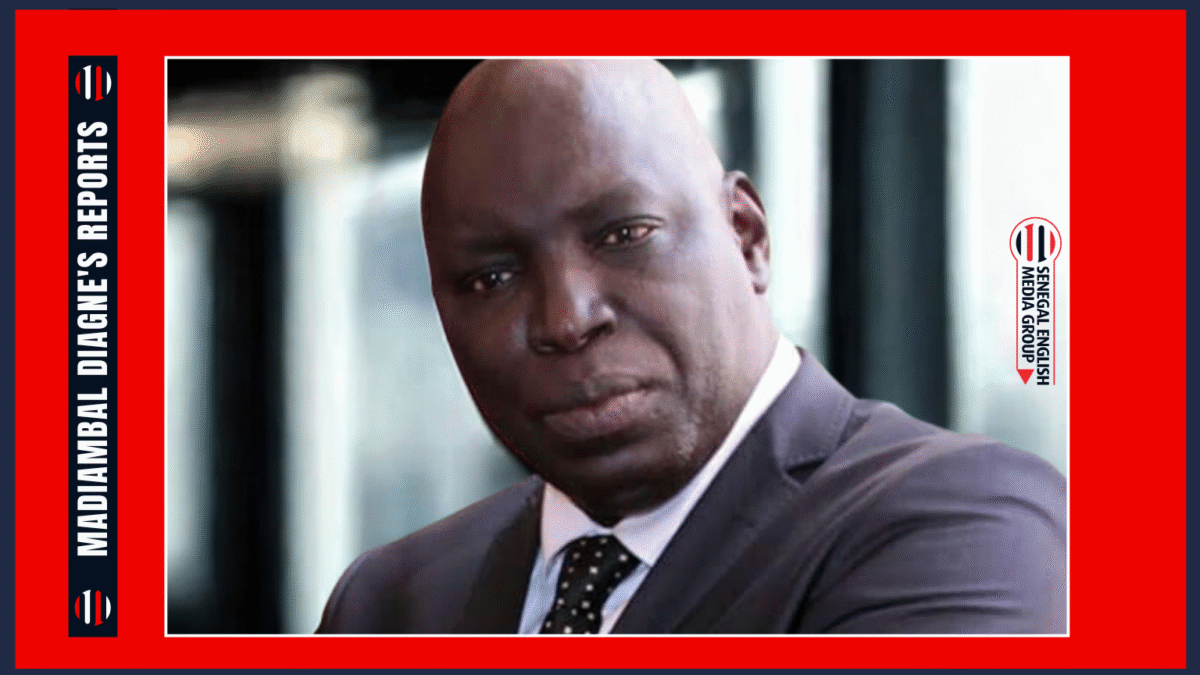
Madiambal Diagne’s Reports and Accusations against Ousmane Sonko:
Madiambal Diagne, a prominent Senegalese journalist and director of Le Quotidien, has intensified his criticism of Prime Minister Ousmane Sonko. Diagne alleges that Sonko has orchestrated a “calculated plan” to “erase” him and his family through what he describes as a “fallacious” judicial case, claiming his family has been “taken hostage” and that Sonko has attempted to instill fear in him. Diagne is currently in France, having left Senegal, and faces an international arrest warrant in a financial case that he asserts is politically motivated and a form of “political persecution”. His extradition hearing from France is scheduled for deliberation on November 25, 2025.
Most recently, Diagne accused Prime Minister Sonko of targeting Mouhamed Dieng, the former director-general of 1XBET Senegal, with the alleged aim of seizing control of 1XBET. Diagne links this to the government’s economic strategy to increase taxes on online gaming, citing a leaked confidential report from the CENTIF (financial intelligence unit) as part of this purported scheme. Furthermore, Diagne revealed a deep atmosphere of distrust within the highest echelons of the Senegalese government, reporting that ministers were subjected to searches upon entering Council of Ministers meetings due to mounting disagreements between President Faye and Prime Minister Sonko. He has offered an analysis of this “conflict,” hinting at internal tensions, hidden ambitions, and political strategies, and urged President Faye to address what he perceives as Sonko’s “derailment.”
In response to Diagne’s ongoing commentary, Prime Minister Sonko’s legal team announced in August 2024 their intention to file a complaint against Diagne for a “systematic campaign of defamation,” insults, and seditious statements. Diagne dismissed these accusations as baseless attempts to neutralize his voice.
Key Political Figures and the Evolving Landscape:
The political alliance between President Bassirou Diomaye Faye and Prime Minister Ousmane Sonko, which brought them to power in 2024, is now facing significant strain, less than a year into their administration. This rift became overtly public when President Faye dismissed Aida Mbodj, a close ally of Sonko, from her role as coordinator of the “Diomaye President Coalition” in early September 2025, appointing Aminata Touré in her stead. Sonko publicly defied this decision, reaffirming his support for Mbodj.
Ousmane Sonko was barred from participating in the 2024 presidential election due to legal issues, which his team maintains were politically motivated. His eligibility for the 2029 presidential election also remains uncertain, as the Supreme Court upheld his defamation conviction in July 2025, which carries a five-year ineligibility penalty. Some members of Sonko’s PASTEF party reportedly suspect President Faye of having explored Sonko’s ineligibility with the Constitutional Council, particularly given the President’s non-exercise of his pardon right. Amid these developments, Sonko has temporarily stepped down from his government role until November 21 for a stated break.
Upcoming Legislative Changes:
Senegal has been actively pursuing legislative reforms. In June 2025, the Parliament adopted internal reforms to the National Assembly’s regulations, aiming to improve its efficiency in lawmaking and government oversight. Further anti-corruption reforms were approved in August 2025, including restructuring the National Office for the Fight against Fraud and Corruption (OFNAC) to focus exclusively on corruption, broadening asset declaration requirements for civil servants, lowering financial reporting thresholds, and mandating public disclosure of government audit reports.
However, a controversial aspect of these anti-corruption efforts is the exemption of President Faye from declaring his assets at the end of his term, a provision that has drawn sharp criticism from opposition leaders for potentially undermining transparency. The government is also engaged in drafting legislation for the digital economy and is undertaking reforms of the General Tax Code and Customs Code to modernize the legal framework to align with contemporary economic realities and bolster investor protection.